Digital support for continuous obesity care

Obesity care doesn’t stop between visits.

Continuous digital support around the obesity care pathway your team already runs.

  • Verification

    In clinical use since 2018

  • NHS network

    Used within NHS services

  • Scandinavia

    Deployed in Swedish regional healthcare

  • Research

    International clinical use and research

Published finding: children treated with Evira improved by around −0.30 BMI SDS after one year, compared with around −0.15 in matched conventional care.Explore the evidence

The care model

Extend care beyond the clinic

One continuous pathway: everyday life at home, remote follow-up between visits and clinical treatment in the clinic.

See how Evira works – in 40 seconds

From monitoring at home to the right support between appointments.

01Patient & family

At home

Families take regular measurements and get feedback that keeps the focus off weight numbers.

02Care team

Between visits

Care teams follow progress remotely and see when extra support is needed.

03Healthcare provider

In the clinic

Assessment, treatment decisions and multidisciplinary care stay with the provider.

The cycle repeats between appointments. Review frequency and clinical responsibility are agreed by the service.

The full pathway, step by step

Pathway fit

Built to fit your pathway

Every obesity service works differently. Evira is designed to support the pathway already in place — rather than forcing services into a new care model.

Evira is not the clinic. It is the continuous digital layer around the clinic: the part of treatment that happens in everyday life, made visible to the team responsible for care.

  • Existing multidisciplinary teams

    Evira sits alongside the MDT already responsible for treatment.

  • Different follow-up frequencies

    Weekly, monthly or every three to six months — the cadence is set locally.

  • Different inclusion criteria

    Services decide which patients and families the approach suits.

  • Remote and face-to-face care

    Supports hybrid pathways, home-first models and long travel distances.

  • Local clinical responsibility

    Assessment, documentation and decisions stay with the provider.

  • Integration with existing workflow

    Review happens across the caseload rather than appointment by appointment.

In practice

Proven in real healthcare systems

Different systems have successfully incorporated Evira into real care — with local teams, local criteria and local clinical responsibility.

All examples

NHS England · Birmingham

Specialist care extended beyond the clinic

Birmingham Women's and Children's NHS Foundation Trust uses Evira within its West Midlands Complications of Excess Weight (CEW) service to support children and families between appointments, with remote follow-up and secure messaging.

Sweden

Part of established pediatric obesity pathways

Evira is used within regional healthcare and specialist services across six Swedish regions as part of combined lifestyle treatment for pediatric obesity.

Norway

Adapted to another healthcare system

Clinical use in Norway shows how the same continuous-care model is configured around a different organisation of specialist care and follow-up.

European clinical research

Research collaboration and published evaluation

Work with academic and clinical partners, including Karolinska Institutet, has produced peer-reviewed studies and service evaluations in real care settings.

2018

In clinical use since

Continuous clinical operation

48

Treatment centers

Across six countries

16

Clinics in the United Kingdom

NHS specialist services

6

Swedish regions

Regional and specialist care

Clinical evidence

Clinical outcomes that persist

The strongest current evidence relates to pediatric obesity treatment: a pragmatic clinical study comparing Evira-supported combined lifestyle treatment with matched conventional care in the Swedish BORIS quality register, followed up over three years.

−0.30 BMI SDS
Mean change after one year with Evira-supported treatment, compared with approximately −0.15 in matched conventional care. 107 children versus 321 children, adjusted for sex, age and degree of obesity at treatment start.
3 years
Follow-up of the same cohort (428 patients) indicates the treatment effect was maintained at three years, with significantly fewer discontinuations.
Published, peer-reviewed
International Journal of Obesity, 2022 and 2025, with Karolinska Institutet.Read the three-year study

These results relate to pediatric obesity treatment in Swedish care. They should not be read as evidence for populations or settings that have not been studied.
One platform, three perspectives

One continuous view of care

The same treatment picture, presented differently to the family, the care team and the service.

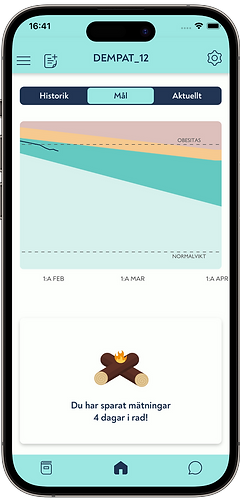
Evira app showing progress as a direction toward the treatment goal without weight figures

For families

  • Simple daily interaction
  • Connected home monitoring
  • Progress without focusing on weight numbers
  • Communication with the care team

See changing trends and respond between visits.

Patient trend with two clinical review points

For clinicians

  • Follow patient progress remotely
  • Identify changing trends
  • Communicate between visits
  • Support more patients efficiently

Create continuity across the pathway and caseload.

Connected home, remote follow-up, and clinic pathway
HomeFollow-upClinic

For health systems

  • Extend existing pathways
  • Support remote follow-up
  • Standardize parts of monitoring
  • Create continuity between appointments

International experience

Different systems. Different pathways.

Healthcare systems differ. Clinical responsibility, reimbursement, workflows, teams and technology differ too.

Our approach is to understand the pathway first — then identify where continuous digital support can add value.

  • NHS

    United Kingdom

    NHS specialist services, including CEW hubs and spokes

  • Sweden

    Regional healthcare and specialist pediatric obesity services

  • Norway

    Specialist care in a differently organised system

  • European collaborations

    Clinical and academic research partnerships

Implementation

From pathway to implementation

Evira works with clinical, operational and digital teams to adapt implementation to local requirements.

  1. 01

    Understand the existing pathway

    Teams, referral routes, visit frequency and who carries clinical responsibility.

  2. 02

    Define where Evira adds value

    Which patients, which part of the pathway and what the team wants to change.

  3. 03

    Align clinical, data and governance requirements

    Information governance, data protection and local approval processes.

  4. 04

    Train the care team and start with patients

    Onboarding, treatment targets and a first cohort of families.

  5. 05

    Evaluate and scale

    Review outcomes and workload, then extend to more patients or services.

Onboarding and trainingInformation governanceData protectionIntegrationsOngoing clinical operationsFor health systems

Pathway conversation

Could Evira fit into your obesity care pathway?

Tell us how your service works today. We can explore where continuous monitoring, family support and between-visit follow-up could add value.