During active treatment
Closer contact
The family measures regularly and works on one area at a time. The care team follows the trend and offers focused support.
The treatment flow
The care team leads the treatment. Evira maintains contact between visits, helping families and providers work toward the same goal with a shared view of progress.
Treatment step by step
Evira supports combined lifestyle treatment rather than replacing it. Physical visits continue as the service intends; the cycle between them becomes visible and continuous.
The family
Meets the care team, gets started with the app and connected device, and agrees the first goals.
The care team
Completes the usual assessment, sets the treatment goal and starts treatment in Evira.
The family
Measures regularly at home. The result is sent automatically without showing a weight number.
The care team
Sees weight development as a trend over time rather than isolated measurements at visits.
The family
Works with food, physical activity, sleep and screen habits in practical steps that fit family life.
The care team
Guides the combined lifestyle treatment and adapts support to the family’s situation.
The family
Can ask questions in the app and receive feedback without waiting for the next appointment.
The care team
Provides focused support digitally and maintains treatment contact throughout the year.
Measurement
The same home measurement supports two audiences. The family sees direction toward the goal; the care team sees the clinical detail needed to assess progress.
In the app at home
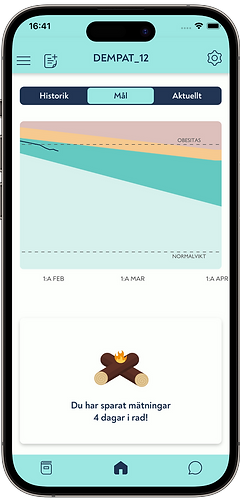
The family sees movement in relation to the treatment goal and confirmation that measurements have been taken.
In the clinical view
The care team sees individual measurements in context, with height estimation and the treatment goal informing clinical assessment.
Illustrative trend only — no patient data or product interface is shown.
Treatment philosophy
Combined lifestyle treatment works through a partnership: the family shapes changes that fit everyday life, and the care team provides direction and clinical oversight.
The family knows its own everyday life. The care team brings medical knowledge, direction and support.
Progress gives the conversation a shared reference point while the work stays focused on sustainable habits.
The care team helps families identify changes they can carry out, rather than prescribing one standard answer.
A changing trajectory can prompt a timely conversation instead of waiting for the next scheduled visit.
Clinical prioritisation
Measurements are compared with each patient’s own trajectory. When direction changes, that patient can come to the team’s attention for closer clinical review.
Evira does not make clinical decisions. The provider reviews the context, speaks with the family and decides what happens next.
Clinical attention
Illustrative pathway view
Over time
Obesity is a long-term condition. The rhythm of support can change as needs change, within the care team’s pathway and clinical judgment.
During active treatment
The family measures regularly and works on one area at a time. The care team follows the trend and offers focused support.
When goals are reached
The family keeps access to support while the care team checks progress at the frequency the pathway recommends.
If progress reverses
A broken trend can be seen before the next visit, allowing the care team to reassess and increase contact when appropriate.
Roles and responsibilities
Nothing in Evira replaces a healthcare contact or medical assessment. Responsibility for care remains with the provider throughout.
The care team
Sets goals, assesses development, documents care and decides on clinical action.
The family
Works on lifestyle habits at home, measures regularly and shares what is realistic in everyday life.
Evira
Maintains the digital connection and makes progress visible to both sides between visits.
Pathway conversation
Tell us how your service works today. We can explore where continuous monitoring, family support and between-visit follow-up could add value.